Many South Africans are beginning to realise that waiting for permanent employment is no longer the only path to success. With unemployment remaining high and competition for jobs increasing every year, more people are looking for ways to create income for themselves. One of the best ways to do this is by enrolling in training programmes that teach practical, income-generating skills.
Self-employment allows people to work independently, start small businesses, offer services, and even employ others in the future. The good thing is that you do not always need a university degree to become self-employed. In many cases, short courses, learnerships, apprenticeships, and skills training programmes can help you build a career and start earning money much faster.
In this article, we will look at some of the best training programmes that can lead to self-employment in South Africa.
Hairdressing and Beauty Therapy
Hairdressing and beauty training programmes are among the most popular paths to self-employment. Many people start by working at salons to gain experience before opening their own businesses.
These programmes usually teach skills such as:
- Hair cutting and styling
- Braiding and weaving
- Nail technology
- Makeup application
- Skincare treatments
- Barbering
The beauty industry continues to grow because people always need grooming and beauty services. After completing training, you can work from home, rent a salon chair, start a mobile beauty business, or open your own salon.
Some people also make extra money by selling beauty products alongside their services.
Plumbing Apprenticeships
Plumbing is a highly valuable trade skill that can lead directly to self-employment. Skilled plumbers are always needed for homes, schools, offices, and construction projects.
Plumbing training programmes teach learners how to:
- Install pipes and water systems
- Repair leaks
- Fix drainage systems
- Install geysers and bathrooms
- Read plumbing plans
Many plumbers begin by working under experienced artisans before starting independent plumbing businesses. Once qualified, you can take private clients and even register a construction or maintenance company.
Trade skills like plumbing often provide long-term opportunities because they are always in demand.
Electrical Training Programmes
Electrical training is another excellent route for people who want to work for themselves. Electricians are needed in households, businesses, factories, and construction sites.
Training normally includes:
- Electrical installations
- Wiring systems
- Fault finding
- Safety procedures
- Solar system installation
- Maintenance work
Many qualified electricians eventually start their own businesses and earn income through installations, repairs, and maintenance services.
With the growth of solar energy in South Africa, electricians with solar installation skills are becoming even more valuable.
Sewing and Fashion Design Courses
Fashion and clothing businesses can start small and grow over time. Sewing and fashion design programmes teach learners how to create clothing, alter garments, and work with fabrics.
Skills often include:
- Pattern making
- Sewing techniques
- Clothing design
- Fabric cutting
- Alterations and repairs
After training, you can start a tailoring business, create school uniforms, make traditional clothing, design fashion items, or open a small boutique.
Many successful fashion entrepreneurs began with basic sewing skills and a home sewing machine.
Catering and Cooking Programmes
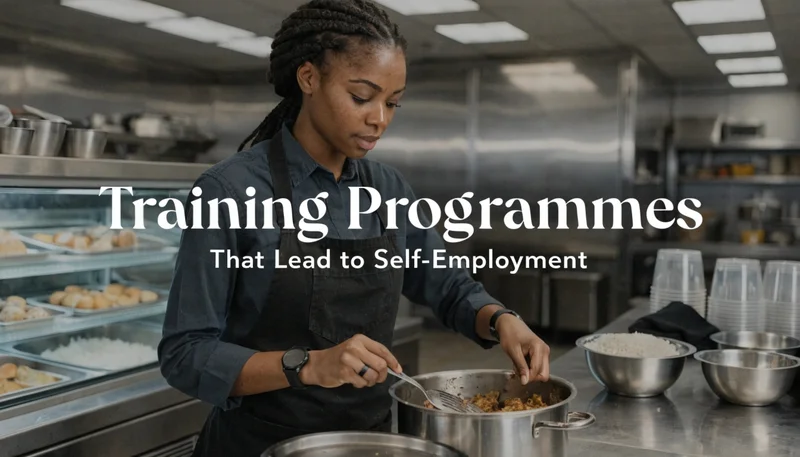
Food businesses are one of the easiest businesses to start with limited capital. Training programmes in catering and cooking help learners develop practical culinary skills.
These programmes may include:
- Food preparation
- Baking
- Catering management
- Hygiene and food safety
- Event catering
- Business management basics
After completing training, you can start businesses such as:
- Catering services
- Baking businesses
- Fast food stalls
- Meal prep services
- Wedding catering
- Street food businesses
Social media has also made it easier for small food businesses to market their services and attract customers.
Welding Training
Welding is a practical trade skill that can open many self-employment opportunities. Welders are needed in construction, manufacturing, repairs, and metalwork industries.
Training programmes usually cover:
- Metal cutting
- Arc welding
- Gas welding
- Safety procedures
- Steel fabrication
Self-employed welders can make gates, burglar bars, fences, trailers, furniture, and many other metal products.
Many people start welding businesses from home workshops and expand over time as they gain clients.
Digital Marketing Courses
Not all self-employment opportunities involve physical labour. Digital marketing is becoming one of the fastest-growing self-employment fields in the world.
Digital marketing programmes teach skills such as:
- Social media marketing
- Content creation
- Search engine optimisation (SEO)
- Graphic design basics
- Email marketing
- Online advertising
After learning these skills, you can work as a freelancer, manage business social media pages, start a marketing agency, or help companies grow online.
Many young people are making money online by managing social media accounts and creating digital content for businesses.
Photography and Videography Training
Photography and videography skills can also lead to self-employment opportunities. Businesses, families, schools, and event organisers constantly need photographers and video creators.
Training programmes may teach:
- Camera operation
- Editing software
- Lighting techniques
- Event photography
- Video production
- Content creation
After gaining experience, you can earn money through:
- Wedding photography
- Graduation shoots
- Event coverage
- Social media content creation
- Business advertising videos
This field allows creative people to turn their talents into businesses.
Carpentry and Woodwork Programmes
Carpentry is another valuable trade that can help people become self-employed. Skilled carpenters can build furniture, kitchen units, roofing structures, doors, and many other products.
Training often includes:
- Measuring and cutting wood
- Furniture making
- Roofing
- Wood finishing
- Tool handling
- Construction basics
Many carpenters operate small workshops and build custom furniture for homes and businesses.
Computer Repair and IT Support Training
Technology is part of everyday life, and many people need help with phones, laptops, and computers. Computer repair programmes teach learners how to diagnose and fix technical problems.
Skills may include:
- Hardware repairs
- Software installation
- Virus removal
- Network setup
- Device troubleshooting
After training, you can open a repair shop, offer mobile repair services, or work as a freelance IT technician.
Driving and Transport Training
Transport-related businesses can also lead to self-employment. Programmes such as truck driving, forklift operation, and driving instructor training can create income opportunities.
Some people later start businesses such as:
- Delivery services
- Shuttle services
- School transport
- Logistics businesses
A valid licence and proper training can create many opportunities in the transport sector.
Why Skills Training Matters
Skills training programmes are important because they focus on practical work experience. Instead of only studying theory, learners develop abilities they can immediately use to earn money.
Self-employment also offers benefits such as:
- Financial independence
- Flexible working hours
- Opportunity to grow a business
- Ability to employ others
- Multiple income opportunities
While self-employment can take time and effort, the right training gives people the confidence and skills needed to start.
Tips Before Choosing a Training Programme
Before enrolling in any programme, it is important to:
Research the Institution
Make sure the college or training centre is accredited and recognised.
Choose a Skill That Is in Demand
Look for services people regularly need in your area.
Consider Startup Costs
Some businesses require tools or equipment, so plan carefully.
Gain Experience
Practical experience helps build confidence and improve your skills.
Learn Basic Business Skills
Understanding pricing, marketing, budgeting, and customer service is very important for self-employment success.
Final Thoughts
Self-employment is becoming a realistic option for many South Africans who want to build independent careers and create income opportunities for themselves. The right training programme can provide practical skills that allow you to start small and grow over time.
Whether you choose plumbing, beauty therapy, digital marketing, catering, sewing, or another skill, success often comes from consistency, hard work, and continuous learning.
Instead of waiting for opportunities, skills training can help you create your own.